The big idea
Algebra uses letters for numbers so that one statement covers every case. Expanding removes brackets and factorising puts them back. Changing the subject of a formula is solving an equation where the answer is another expression.
Key ideas
- Only like terms can be added: 3a + 2a = 5a, but 3a + 2b stays as it is.
- To expand two brackets, multiply every term in the first by every term in the second.
- To factorise x2 + bx + c, find two numbers that multiply to c and add to b.
- a2 − b2 = (a − b)(a + b), the difference of two squares.
- To change the subject when it appears twice, collect those terms on one side and factorise.
Equations
| a(b + c) = ab + ac | expanding |
| (x + a)(x + b) = x2 + (a + b)x + ab | double brackets |
| a2 − b2 = (a − b)(a + b) | difference of two squares |
| (a + b)2 = a2 + 2ab + b2 | perfect square |
Worked questions: easy, medium, hard
Three questions that climb in difficulty, each solved one step at a time. Try each one before you read the steps.
Expand and simplify 3(2x − 5) + 4x.
- Multiply out: 6x − 15.
- Add the 4x: 6x + 4x − 15.
- 10x − 15.
(a) Factorise x2 + 7x + 12. (b) Expand (2x − 3)(x + 5).
- (a) Two numbers that multiply to 12 and add to 7: 3 and 4.
- (a) (x + 3)(x + 4).
- (b) 2x × x = 2x2, 2x × 5 = 10x, −3 × x = −3x, −3 × 5 = −15.
- (b) 2x2 + 7x − 15.
Make x the subject of y = (3x + 1)/(x − 2).
- Multiply both sides by (x − 2): y(x − 2) = 3x + 1.
- Expand: xy − 2y = 3x + 1.
- Collect the x terms on one side: xy − 3x = 2y + 1.
- Factorise and divide: x(y − 3) = 2y + 1, so x = (2y + 1)/(y − 3).
Common mistakes
- Forgetting to multiply the second term: 3(2x − 5) is not 6x − 5.
- Writing (x − 4)2 as x2 − 16 or x2 + 16. There is a middle term.
- Cancelling terms instead of factors in a fraction.
Now you try: easy to hard
Six more questions, two at each level. These are the questions on the worksheet; each solution opens when you are ready.
Easy 1. Simplify 5a + 3b − 2a + b.
Show the step-by-step solution
Collect like terms: 3a + 4b.
Easy 2. Factorise 6x2 − 9x.
Show the step-by-step solution
The common factor is 3x: 3x(2x − 3).
Medium 3. Expand (x − 4)2.
Show the step-by-step solution
(x − 4)(x − 4) = x2 − 4x − 4x + 16 = x2 − 8x + 16.
Medium 4. Factorise x2 − 49.
Show the step-by-step solution
Difference of two squares: (x − 7)(x + 7).
Hard 5. Make r the subject of V = (4/3)πr3.
Show the step-by-step solution
Multiply by 3: 3V = 4πr3. Divide by 4π: r3 = 3V/(4π). Cube root: r = ∛(3V/(4π)).
Hard 6. Simplify (x2 − 9)/(x2 + 5x + 6).
Show the step-by-step solution
Factorise: (x − 3)(x + 3)/[(x + 2)(x + 3)]. Cancel (x + 3): (x − 3)/(x + 2).
6 questions to print or save, with full step-by-step answers at the end.
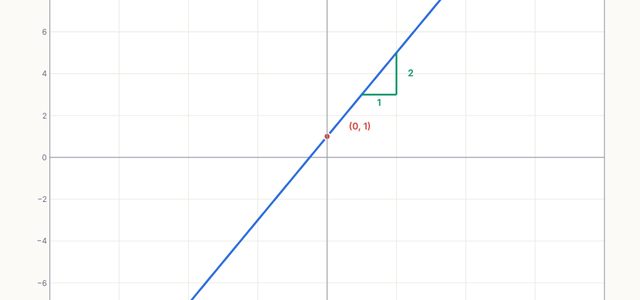
Open the Function Graphs simulation and test every idea on this page yourself.
Open the simulation →