The big idea
At A Level a function comes with its domain (allowed inputs) and range (possible outputs). The modulus |x| is the size of a number ignoring its sign. Partial fractions split one algebraic fraction into simpler ones, ready for integration or series expansion.
Key ideas
- fg(x) means apply g first, then f. The order matters.
- An inverse exists only for a one-to-one function. The domain of f−1 is the range of f.
- |f(x)| = a gives two cases, f(x) = a and f(x) = −a. Check each answer in the original equation.
- |x − a| < b means a − b < x < a + b.
- For partial fractions with distinct linear factors, substitute the root of each factor to find its constant.
Equations
| fg(x) = f(g(x)) | composite |
| |x − a| < b ⇔ a − b < x < a + b | modulus inequality |
| N(x)/[(x − a)(x − b)] = A/(x − a) + B/(x − b) | partial fractions |
| domain of f−1 = range of f | inverse functions |
Worked questions: easy, medium, hard
Three questions that climb in difficulty, each solved one step at a time. Try each one before you read the steps.
f(x) = 2x + 1 and g(x) = x2. Find fg(3) and gf(3).
- fg(3): g(3) = 9, then f(9) = 19.
- gf(3): f(3) = 7, then g(7) = 49.
- The two orders give different answers.
Solve |2x − 3| = 5 and |2x − 3| < 5.
- Two cases: 2x − 3 = 5 gives x = 4; 2x − 3 = −5 gives x = −1. So x = 4 or x = −1.
- For the inequality: −5 < 2x − 3 < 5.
- Add 3 and halve: −1 < x < 4.
Express (x + 7)/[(x − 1)(x + 3)] in partial fractions.
- Write it as A/(x − 1) + B/(x + 3), so x + 7 = A(x + 3) + B(x − 1).
- Put x = 1: 8 = 4A, so A = 2.
- Put x = −3: 4 = −4B, so B = −1.
- 2/(x − 1) − 1/(x + 3).
Common mistakes
- Applying f and g in the wrong order.
- Keeping a solution of a modulus equation that does not satisfy the original.
- Forgetting to state the domain of an inverse.
Now you try: easy to hard
Six more questions, two at each level. These are the questions on the worksheet; each solution opens when you are ready.
Easy 1. Find the inverse of f(x) = (x − 4)/3.
Show the step-by-step solution
y = (x − 4)/3 gives x = 3y + 4. f−1(x) = 3x + 4.
Easy 2. State the range of f(x) = x2 + 2 for all real x.
Show the step-by-step solution
x2 ≥ 0, so f(x) ≥ 2.
Medium 3. Solve |x + 2| = 3x.
Show the step-by-step solution
Case 1: x + 2 = 3x gives x = 1. Case 2: −(x + 2) = 3x gives x = −1/2, but then 3x is negative and cannot equal a modulus. x = 1 only.
Medium 4. f(x) = √(x − 1) for x ≥ 1. Find f−1(x) and its domain.
Show the step-by-step solution
y = √(x − 1) gives x = y2 + 1. f−1(x) = x2 + 1, with domain x ≥ 0 (the range of f).
Hard 5. Express 3/[x(x + 3)] in partial fractions.
Show the step-by-step solution
3 = A(x + 3) + Bx. x = 0: A = 1. x = −3: B = −1. 1/x − 1/(x + 3).
Hard 6. f(x) = x − 1 and g(x) = x2 + 3x. Solve gf(x) = 4.
Show the step-by-step solution
gf(x) = (x − 1)2 + 3(x − 1) = x2 + x − 2. Set equal to 4: x2 + x − 6 = 0, so x = 2 or x = −3.
6 questions to print or save, with full step-by-step answers at the end.
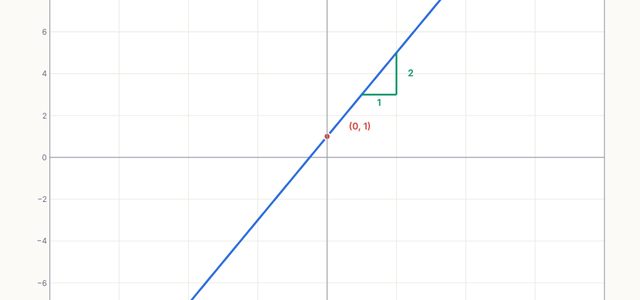
Open the Function Graphs simulation and test every idea on this page yourself.
Open the simulation →