The big idea
A logarithm is a power: log₂ 8 = 3 because 2³ = 8. Logs undo exponentials, which is what you need to solve an equation with the unknown in the power. The number e gives the exponential whose rate of change equals its own value, so it models growth and decay.
Key ideas
- loga b = c means ac = b.
- Logs of products add, logs of quotients subtract, and a power comes down as a multiplier.
- To solve ax = b, take logs of both sides: x = ln b / ln a.
- ln x and ex are inverses: ln(ex) = x.
- For y = Aekt, the growth is exponential when k > 0 and decay when k < 0.
Equations
| loga(xy) = loga x + loga y | product law |
| loga(x/y) = loga x − loga y | quotient law |
| loga(xk) = k loga x | power law |
| ax = b ⇒ x = ln b / ln a | solving for a power |
Worked questions: easy, medium, hard
Three questions that climb in difficulty, each solved one step at a time. Try each one before you read the steps.
Evaluate log2 8 and log10 0.01.
- log2 8 asks "2 to what power is 8?" 23 = 8, so the answer is 3.
- 0.01 = 10−2.
- So log10 0.01 = −2.
Solve 3x = 20, giving your answer to 3 significant figures.
- Take natural logs of both sides: x ln 3 = ln 20.
- x = ln 20 / ln 3 = 2.9957/1.0986.
- x = 2.73.
Solve log2 x + log2(x − 2) = 3.
- Combine with the product law: log2[x(x − 2)] = 3.
- Undo the log: x(x − 2) = 23 = 8.
- x2 − 2x − 8 = 0, so (x − 4)(x + 2) = 0.
- x = −2 is rejected because log2(−2) does not exist. x = 4.
Common mistakes
- Writing log(x + y) as log x + log y.
- Keeping a solution that makes a log of a negative number.
- Treating ln 20 / ln 3 as ln(20/3).
Now you try: easy to hard
Six more questions, two at each level. These are the questions on the worksheet; each solution opens when you are ready.
Easy 1. Evaluate log3 81.
Show the step-by-step solution
34 = 81, so 4.
Easy 2. Simplify log10 2 + log10 5.
Show the step-by-step solution
log10(2 × 5) = log10 10 = 1.
Medium 3. Solve e2x = 7.
Show the step-by-step solution
2x = ln 7, so x = (ln 7)/2 = 0.973.
Medium 4. Solve 2 log x − log 4 = log 9 for x > 0.
Show the step-by-step solution
log(x2/4) = log 9, so x2 = 36 and x = 6.
Hard 5. A mass decays as m = 80e−0.05t (t in days). Find its half-life.
Show the step-by-step solution
0.5 = e−0.05t, so t = ln 2/0.05 = 13.9 days.
Hard 6. Solve 22x − 5(2x) + 4 = 0.
Show the step-by-step solution
Let u = 2x: u2 − 5u + 4 = 0, so u = 1 or 4. x = 0 or x = 2.
6 questions to print or save, with full step-by-step answers at the end.
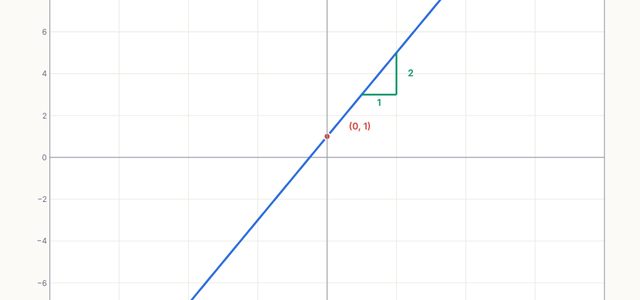
Open the Function Graphs simulation and test every idea on this page yourself.
Open the simulation →