The big idea
The factor theorem turns factorising a cubic into a search: if f(a) = 0 then (x − a) is a factor. The binomial expansion gives every term of (a + b)ⁿ directly, so you can pick out one coefficient without multiplying out.
Key ideas
- Factor theorem: f(a) = 0 ⇔ (x − a) is a factor. Remainder theorem: the remainder on dividing by (x − a) is f(a).
- Try small whole numbers that divide the constant term.
- Once you have one factor, divide (or compare coefficients) to get a quadratic, then factorise that.
- The term in xr of (a + bx)n is C(n, r) an−r (bx)r. Keep the bracket around bx.
Equations
| f(a) = 0 ⇔ (x − a) is a factor | factor theorem |
| (a + b)n = Σ C(n, r) an−r br | binomial expansion |
| C(n, r) = n!/[r!(n − r)!] | binomial coefficient |
| (1 + x)n = 1 + nx + n(n − 1)x2/2 + … | first terms |
Worked questions: easy, medium, hard
Three questions that climb in difficulty, each solved one step at a time. Try each one before you read the steps.
Show that (x − 2) is a factor of f(x) = x3 − 3x2 + 4.
- By the factor theorem, check f(2).
- f(2) = 8 − 12 + 4 = 0.
- f(2) = 0, so (x − 2) is a factor.
Factorise x3 − 3x2 + 4 completely.
- (x − 2) is a factor, so x3 − 3x2 + 4 = (x − 2)(x2 + px − 2). The constant −2 comes from 4 ÷ (−2).
- Compare x2 terms: −3 = p − 2, so p = −1.
- Factorise the quadratic: x2 − x − 2 = (x − 2)(x + 1).
- (x − 2)2(x + 1).
Find the coefficients of x2 and x3 in the expansion of (2 + 3x)5.
- General term: C(5, r) × 25−r × (3x)r.
- x2: C(5, 2) × 23 × 32 = 10 × 8 × 9 = 720.
- x3: C(5, 3) × 22 × 33 = 10 × 4 × 27 = 1080.
Common mistakes
- Testing f(−2) to check the factor (x − 2).
- Forgetting to raise the coefficient to the power: (3x)2 is 9x2, not 3x2.
- Dropping the sign in (1 − 2x)n.
Now you try: easy to hard
Six more questions, two at each level. These are the questions on the worksheet; each solution opens when you are ready.
Easy 1. Find the remainder when x3 + 2x − 5 is divided by (x − 1).
Show the step-by-step solution
f(1) = 1 + 2 − 5 = −2.
Easy 2. Expand (1 + x)4.
Show the step-by-step solution
Coefficients 1, 4, 6, 4, 1: 1 + 4x + 6x2 + 4x3 + x4.
Medium 3. (x + 1) is a factor of x3 + ax2 − x + 2. Find a.
Show the step-by-step solution
f(−1) = −1 + a + 1 + 2 = 0, so a = −2.
Medium 4. Find the first three terms of (1 − 2x)6.
Show the step-by-step solution
1 + 6(−2x) + 15(−2x)2 = 1 − 12x + 60x2.
Hard 5. Solve x3 − 6x2 + 11x − 6 = 0.
Show the step-by-step solution
f(1) = 0, so (x − 1) is a factor: (x − 1)(x2 − 5x + 6) = (x − 1)(x − 2)(x − 3). x = 1, 2 or 3.
Hard 6. Find the coefficient of x3 in (3 − x)5.
Show the step-by-step solution
C(5, 3) × 32 × (−1)3 = 10 × 9 × (−1) = −90.
6 questions to print or save, with full step-by-step answers at the end.
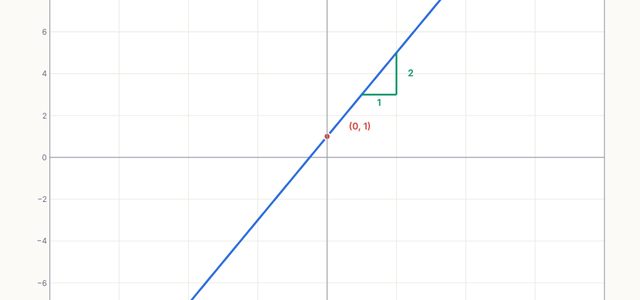
Open the Function Graphs simulation and test every idea on this page yourself.
Open the simulation →